
creator of Dad Starting Over, and author of The Dead Bedroom Fix (Third Edition).
 If you’re a man living in a sexless marriage, stuck in a dead bedroom, or only getting “pity sex,” this interview hits the real drivers behind it.
It focuses on Nice Guy Syndrome, boundaries, confidence, self-worth, and the patterns that shut down marriage intimacy.Ralph talks about the problems men hide.
- Men who look successful.
- Men who provide.
- Men who keep the family machine running.
- Men who go home to a roommate marriage and pretend it’s fine.
It’s not fine.
This episode gives you language, frameworks, and next steps.
Quick episode recap
- Ralph Brewer explains why a dead bedroom is rarely “just about sex.”
- He breaks down the anxious vs avoidant relationship dynamic that drives a lot of sexless marriages.
- He calls out Nice Guy Syndrome and “covert contracts” that poison attraction.
- He explains why boundaries, independence, and identity make a man harder to ignore at home.
- He lays out a clean, direct way to have “the talk” without sounding needy or asking permission.
- He explains why men need a real circle, and why he built the Help For Men Brotherhood.
Who is Ralph Brewer
Ralph Brewer built his platform after a hard life season that included divorce and becoming a single father.
He started writing as a way to cope.
That writing grew into Dad Starting Over, a large audience across platforms.
Ralph says he has covered many topics: parenting, finances, fitness, stress, and life after divorce.
One topic consistently rises to the top.
Dead bedroom.
Sexless marriage.
The loss of marriage intimacy.
From that demand, he wrote The Dead Bedroom Fix.
The interview references the Third Edition as the latest edition discussed in this episode.
He also founded Help For Men and its private support community, the Help For Men Brotherhood.
The Brotherhood is built for men who want to improve.
Men who are tired of trying to figure everything out alone.
Why “dead bedroom” is not just sex
 One of the strongest points in the episode is simple:
Most men don’t want a wife who “lays there” and says, “Get it over with.”
- Men want to feel wanted.
- Men want to feel valued.
- Men want to feel chosen.
Ralph frames sex as a signal.
- A signal of partnership.
- A signal of attraction.
- A signal of appreciation.
- That’s why “pity sex” can feel worse than none.
- It hits a man’s self-respect.
If you want a real fix, you need to treat the bedroom problem as a symptom.
- The deeper problem is the relationship dynamic.
- The pattern.
- The identity each person has inside the marriage.
Ask yourself
- Do you want “sex,” or do you want to feel desired?
- Do you want release, or do you want connection and respect?
- Do you want a partner who wants you, or a partner who tolerates you?
The roommate marriage: how it forms
The episode repeatedly returns to a common outcome:
- A marriage becomes a logistics partnership.
- Work.
- Kids.
- Chores.
- Bills.
- Sleep.
- Repeat.
Ralph describes men getting caught in what he calls the “family machine.”
- You wake up.
- You do the schedule.
- You handle the job.
- You handle the house.
- You crash.
- Then you do it again.
Over time, romance gets crowded out.
- Erotic energy fades.
- The marriage becomes safe and functional.
- The man feels like a roommate.
Signs you’re in a roommate marriage
- Conversations are only about kids, tasks, or bills.
- Touch disappears.
- Date nights die.
- You feel like you need permission for intimacy.
- You start avoiding the topic because it always turns into a fight.
- You stop initiating because rejection feels predictable.
The anxious vs avoidant trap (a major theme of the interview)
Ralph explains a dynamic he often sees among men who seek self-help and marriage advice.
- He describes many of these men as “anxious” in attachment style.
- They want reassurance.
- They want connection.
- They want consistent signals that the relationship is okay.
He contrasts that with an “avoidant” partner.
- Someone who wants space.
- Someone who feels overwhelmed by too much emotional pursuit.
- Someone who treats connection as pressure.
The cycle becomes brutal:
- He chases.
- She withdraws.
- He chases harder.
- She shuts down more.
- Sex becomes the battlefield.
What this looks like in real life
- You ask, “Are we okay?” and she rolls her eyes.
- You want to talk, she wants to be left alone.
- You bring up intimacy, she says you only want sex.
- You try harder, she feels pressured.
- You back off, she feels relief, not desire.
Ralph’s point is direct:
- If you’re the anxious one, you need to become more secure.
- You need to become comfortable in your own skin.
- You need to stop placing your self-worth on your wife’s approval.
The “wife as therapist” problem
Ralph makes a statement that lands hard:
- When a man places too much emotional weight on his wife, she becomes his best friend, his lover, his therapist.
- Then, in many cases, she becomes his “mom.”
That dynamic kills erotic tension.
- It turns a relationship into caretaking.
- Caretaking is not desire.
Common behaviors that create this dynamic
- Constant reassurance seeking.
- Over-sharing every fear as a way to get comfort.
- Putting her in charge of your emotions.
- Expecting her to soothe you every time you feel stressed.
- Making her the center of your identity.
You can love your wife deeply. You can be emotionally open. You can still keep a backbone. That backbone matters for attraction.
Nice Guy Syndrome and why “being nice” often fails
A central part of the interview is Nice Guy Syndrome.
Ralph references No More Mr. Nice Guy by Dr. Robert Glover as a key concept in this space.
“Nice” is not the same as “good.”
Ralph frames “nice guy” behavior as people-pleasing, conflict avoidance, low boundaries, and low identity.
The “nice guy” often fears rocking the boat.
In the interview, this shows up as men who talk like this:
- “I buy flowers.”
- “I listen to her problems.”
- “I do chores.”
- “I’m sweet.”
- “So why won’t she sleep with me?”
That mindset feels like entitlement to your wife.
- Even when you don’t say it out loud.
- Women feel it.
- Desire drops.
Traits Ralph calls out
- No boundaries.
- Low self-worth.
- Fear of conflict.
- Approval seeking.
- Decisions outsourced to your wife.
- Resentment held in silence.
- Shame around sex and desires.
Good man vs desirable man (from the interview)
- Good man: values, integrity, protection, leadership, stable identity.
- Desirable man: independence, confidence, backbone, self-respect, healthy tension.
- Strong marriages require both.
Covert contracts: the hidden deal that destroys intimacy
Ralph uses a term that explains the dead bedroom spiral for a lot of men:
covert contracts.
A covert contract is a hidden agreement in your head.
“I did X, so you owe me Y.”
It often sounds like:
- “I fixed the thing.”
- “I worked overtime.”
- “I handled the kids.”
- “I bought the gift.”
- “Now you owe me sex.”
Ralph and the host call it what it is.
- It’s not “nice.”
- It’s manipulation.
What to do instead
- Do good things because you choose to be a good man.
- Drop the scoreboard.
- Build a life you respect, even if nobody claps.
- Stop using “service” as a strategy to buy desire.
When you do good things as a covert contract, you leak resentment. That resentment shows up in tone, posture, and pressure. Pressure kills attraction.
Fitness, looks, and “doing cool stuff” again
The episode goes deep on a point many men avoid:
- Looks matter.
- Fitness matters.
- Taking care of yourself matters.
Ralph adds a deeper layer:
- Taking care of yourself signals independence.
- Independence signals confidence.
- Confidence signals identity.
- Identity signals leadership.
The host, M. Curtis McCoy, shares an example from an event with high-earning men who still struggle with a sexless marriage.
Ralph agrees with the theme:
You can be successful in business and still lose traction at home.
What “do cool stuff” means in real life
- Get back into the hobbies that made you feel alive.
- Build a social circle that does not depend on your wife.
- Train your body with purpose.
- Stop living only as a worker and task manager.
- Become a man you respect when you look in the mirror.
The mirror test (from the interview)
- Do you respect the man you see?
- Are you proud of how you carry yourself?
- Do you show up with confidence in public?
- Do men respect you?
- Do you keep your word?
Ralph says it plainly in this episode:
“Hit the gym. It matters.”
Comfort vs erotic desire (and why kids change everything)
A big section of the conversation is about balancing comfort and erotic desire.
- Ralph describes it as a push-and-pull.
- Early relationship energy is often high.
- Then the kids arrive.
- Then routines.
- Then fatigue.
- Then the bedroom fades.
He describes “wife 2.0” after kids.
- A new phase.
- A new identity.
- A new pressure load.
His view is not fatalistic.
- It’s realistic.
- You need more work.
- You need more intention.
- You need to protect the couple.
Key practical ideas discussed
- Date nights matter.
- Time away from the kids matters.
- Leaving the kids with trusted family can be healthy.
- The bed should be protected as adult space.
- The man often needs to lead this effort.
Leadership is not control. It is direction. It’s planning. It’s taking charge of the couple’s connection.
Avoiding conflict quietly destroys attraction
The episode gets blunt about conflict avoidance.
Ralph frames it as fear:
“If I upset you, you might leave me.”
That fear drives behavior.
- It drives behavior at home.
- It drives behavior at work.
- It drives behavior with bosses who exploit you.
In the interview, Ralph connects this to an abundance mindset:
- The ability to accept worst-case scenarios without collapsing.
- If the relationship ends, you survive.
- If the job ends, you survive.
- If you hear “no,” you survive.
What does this mean for a man in a sexless marriage?
- You stop tiptoeing.
- You stop negotiating your self-respect.
- You stop avoiding necessary conversations.
- You act like a man who can stand on his own.
Attraction often rises when fear drops.
- Fear creates neediness.
- Neediness creates pressure.
- Pressure kills the bedroom.
The hard truth: “You married the wrong woman” (use with maturity)
Ralph shares a hard truth he tells some men after hearing their full story:
In some cases, the man married the wrong woman.
He describes men who never vetted the relationship. They moved fast. They ignored red flags. They accepted “fine” as good enough. Then life stress revealed the real person.
That truth is painful. Ralph’s point is not to shame a man. It’s to stop a man from wasting decades in denial.
He also shares the flip side:
- Sometimes the wife is a good woman.
- The man has become needy.
- He has low self-worth.
- He stopped leading.
- Attraction faded for good reasons.
That is why the book and the community focus on the man’s identity first.
- You can’t fake confidence.
- You can’t fake boundaries.
- You rebuild them.
How to bring up sex without asking permission: “the healthy talk”
Near the end of the interview, Ralph outlines a clean approach to “the talk.”
- Not begging.
- Not pleading.
- Not manipulation.
- Not passive-aggressive comments.
The healthy talk framework (built from the episode)
- Call the pattern what it is: “This is weird.”
- State the reality: “We live together and don’t touch. That’s not normal for me.”
- State your desire: “I want connection and intimacy with you.”
- Ask for partnership: “Are you willing to work on this with me?”
- Bring a plan: counseling, structured steps, scheduled time, real follow-through.
- Hold your boundary: “If you refuse to work on this, I need to make decisions for my life.”
Ralph warns about a response many men receive:
“I checked out years ago.”
It’s brutal. It can still be a turning point.
A man cannot build intimacy alone. If the wife refuses all effort, that becomes information. Clear information.
Help For Men and the Help For Men Brotherhood
The interview keeps coming back to a core pain point:
- Many men have no real brothers.
- No real board of directors.
- No circle where they can speak the truth without getting brushed off.
Most men have “wings and beer” friends.
- Sports.
- Work.
- Surface talk.
- That’s not where you unpack a dead bedroom.
- That’s not where you unpack Nice Guy Syndrome.
- That’s not where you unpack boundaries, anxiety, self-worth, betrayal, fear, and rebuilding.
That is why Ralph built Help For Men. That is why he built the Help For Men Brotherhood. A private community built around men improving their lives.
Who the Help For Men Brotherhood is for (based on this episode)
- Men stuck in a sexless marriage or dead bedroom.
- Men rebuilding after divorce.
- Men dealing with betrayal or disrespect.
- Men with high anxiety and low self-worth.
- Men who want stronger boundaries and a stronger identity.
- Men who want real support from men who get it.
The Help For Men Brotherhood gives men a place to talk with other men who have lived it. Men who can say “me too” without judgment. Men who can point out blind spots fast.
Join here:
https://helpformen.com/join
Ralph Brewer’s books mentioned in this episode
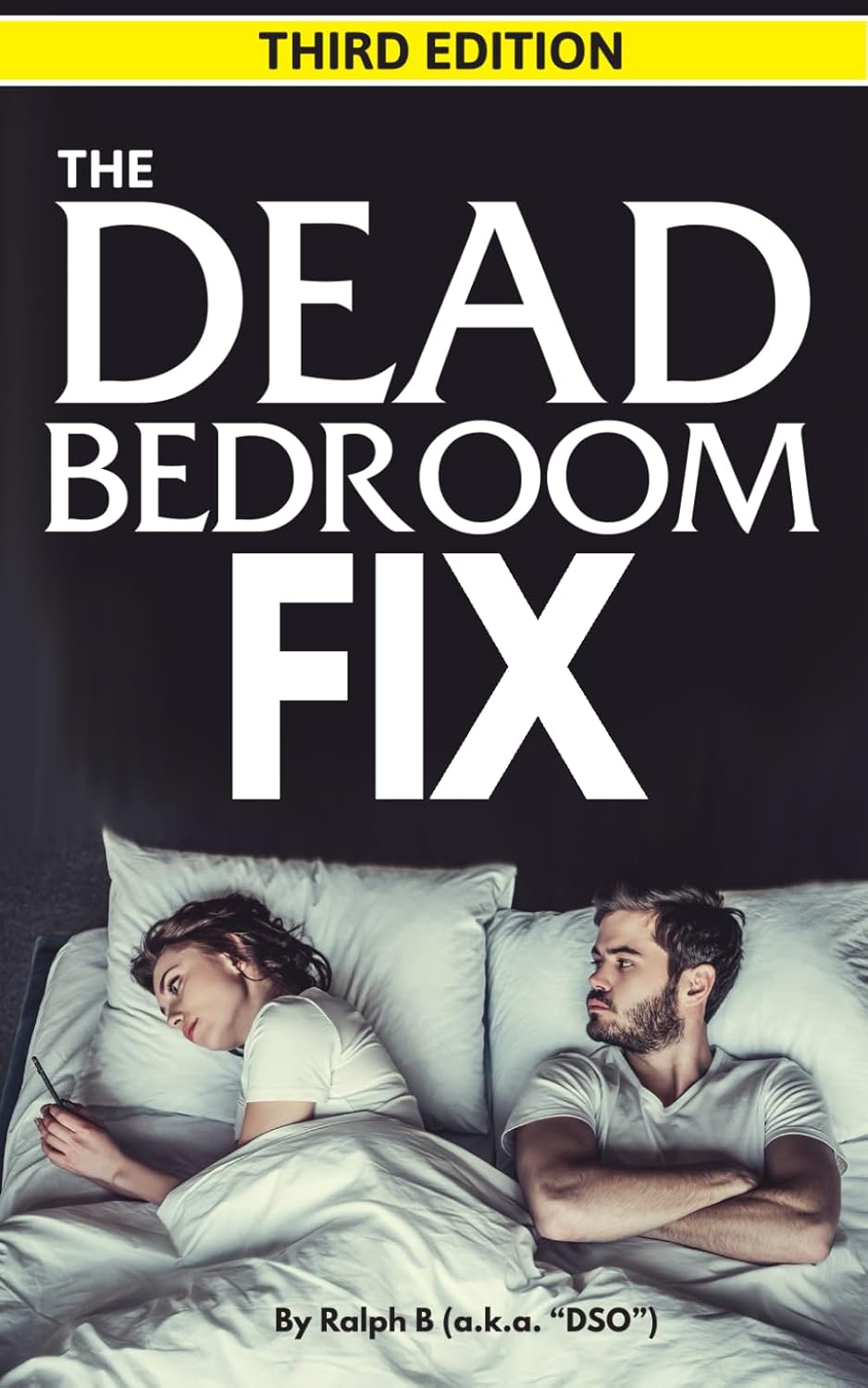
This interview centers on The Dead Bedroom Fix (Third Edition). Ralph references that it is his most popular book. The book targets men who want to fix dead bedroom patterns and restore real intimacy.
Books discussed
- The Dead Bedroom Fix (Third Edition) — the core topic of this interview.
- Rebuild — Ralph mentions it as a guide to starting over as a man and building identity and values.
If you want to start with one book from Ralph, start with:
The Dead Bedroom Fix (Third Edition). Read it with honesty. Write notes. Look for the parts that trigger you. Those parts point to your work.
Action steps for men stuck in a sexless marriage (from the interview)
This section turns the interview into a practical checklist.
- No theory.
- No fluff.
- Just moves.
1) Drop the covert contract
- Stop “earning sex” with chores, gifts, or favors.
- Stop keeping score.
- Stop leaking resentment.
- Do good because you choose to be good.
2) Rebuild your identity outside your wife
- Build a social circle that is not dependent on her.
- Get back into hobbies that make you feel alive.
- Stop living only as a worker and task manager.
3) Build confidence through discipline
- Train your body.
- Clean up your posture and presence.
- Keep your word.
- Walk like a man who respects himself.
4) Lead with boundaries
- Stop avoiding conflict that needs to happen.
- Stop accepting disrespect.
- Call time out when things violate your values.
5) Protect the couple space
- Bring back date nights.
- Create time away from the kids.
- Protect the bed as adult space.
6) Have the talk from strength
- State the reality.
- State what you want.
- Ask if she will work with you.
- Bring a plan.
- Hold your boundary.
Your goal is not to “win” a conversation. Your goal is to stop living in silent misery. Your goal is clarity. Clarity creates action.
FAQ for SEO and AEO (dead bedroom, sexless marriage, Nice Guy Syndrome)
What is a dead bedroom?
A dead bedroom is a relationship where sex is rare or gone. It can also include sex that feels like an obligation or “pity sex.” In this interview, Ralph frames it as a symptom of deeper disconnect, identity issues, anxiety, and relationship patterns.
Why does a sexless marriage happen?
A sexless marriage can form when routine replaces romance, stress replaces connection, and partners fall into chase-withdraw cycles. The interview highlights anxious vs avoidant patterns, weak boundaries, low self-worth, and covert contracts as common drivers.
What is Nice Guy Syndrome?
Nice Guy Syndrome is people-pleasing behavior driven by fear, shame, and approval seeking. It often includes conflict avoidance, weak boundaries, resentment, and hidden “deals” where a man expects affection or sex as payment for being “nice.” Ralph links this to a loss of attraction over time.
What are covert contracts in marriage?
A covert contract is a hidden agreement: “I did X, so you owe me Y.” The interview calls this out as a major source of resentment and pressure. Pressure kills desire.
How do boundaries help marriage intimacy?
- Boundaries communicate self-respect and identity.
- They reduce neediness.
- Boundaries stop you from being run over.
- The interview frames boundaries as a key part of becoming a man your wife can respect and desire.
What should a man do first if he’s stuck in a dead bedroom?
- Start with an honest inventory: Your fitness, your confidence, your identity, your boundaries, your behavior, your neediness, your avoidance of conflict.
- Then get a plan. Ralph points men to The Dead Bedroom Fix (Third Edition) and to real community support in the Help For Men Brotherhood.
Watch the episode, then take a real step
If you watched this episode and felt it hit close to home, use it.
- Don’t just nod.
- Don’t just feel angry.
- Don’t just feel ashamed.
- Use it.
Two direct next steps
- Buy the book: The Dead Bedroom Fix (Third Edition) by Ralph Brewer.
- Join the community: Help For Men and the Help For Men Brotherhood at helpformen.com/join.
A sexless marriage thrives in isolation.
- Men stay silent.
- Men feel alone.
- Men keep taking hits at home and at work.
- The solution starts when you stop doing it alone.
Ralph Brewer built Dad Starting Over, wrote The Dead Bedroom Fix, and created Help For Men for one reason:
so men can rebuild strength, standards, boundaries, and confidence.
If you want a stronger life, a stronger marriage, and a stronger brotherhood, start now.